
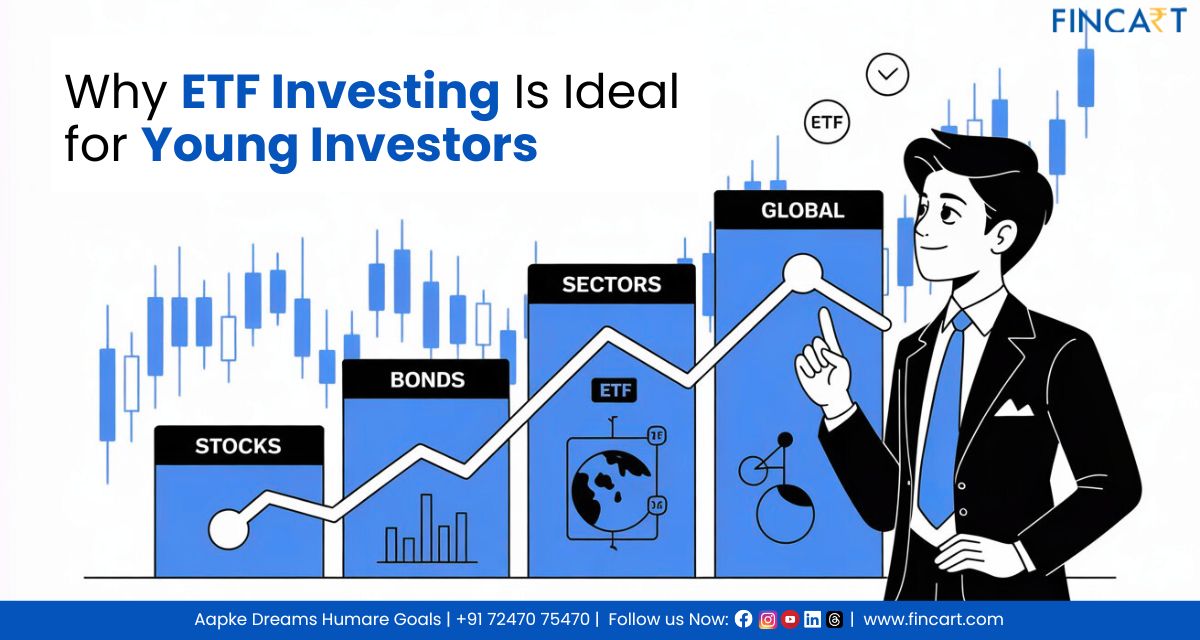
Young investors often feel overwhelmed when they think about investing. The market seems noisy, choices seem endless, and the risks feel unpredictable. Yet this is also the best stage of life to start building long-term wealth. You have time on your side, and even small steps can shape a strong financial future. In this context, ETF (Exchange Traded Fund) investing stands out as one of the simplest and most effective ways to begin. ETFs allow people who are new to finance to build a diversified portfolio at lower costs. With this approach, young investors do not need to track every stock or worry about timing the market. They simply need to stay consistent.
If someone wants guidance in their early years, an investment consultant or structured investment advisory services can also offer clarity. But even without deep knowledge, beginners can start out with ETFs and learn along the way. This article covers everything you need to know about ETFs, why ETF investing is ideal for young investors, how it compares to stock picking, and practical steps to get started.
What is an ETF?
An ETF, or Exchange Traded Fund, is a pooled investment vehicle that trades on the stock exchange and seeks to replicate the returns of a chosen benchmark index. Although it trades like a stock, it represents a portfolio built to mirror a specific index by owning the securities that make up that index. Because ETFs trade throughout the day at market prices, they offer transparency, liquidity, and a simple way to gain diversified exposure.
How Do ETFs Work?
- The ETF tracks an index.
- When the index moves up or down, the ETF behaves in the same way.
- You buy and sell ETFs on the stock exchange, just like shares.
- The ETF price changes during the trading day.
What Do You Own When You Buy an ETF?
When you buy one unit of an ETF, you own a small portion of all the securities inside it. This gives you instant diversification without needing to pick individual stocks.
Types of ETFs
ETFs are categorized by what they hold (stocks, bonds, commodities, currencies) or their strategy (index, sector/thematic, etc.), offering diverse ways to invest in different markets. Most ETFs are index-based and designed to mirror the performance of a specific benchmark. These benchmarks may be equity, debt, commodity, or sector indices, and the ETF tracks them by holding all or a representative portion of the underlying securities.
- Equity ETFs track stock market indices, like the Nifty 500, Nifty Next 50, etc. They provide exposure to a broad range of companies, reflecting overall market performance.
- Debt ETFs track bond or fixed-income indices, including government or corporate bonds. They allow investors to gain diversified exposure to interest-bearing instruments.
- Commodity ETFs track the price of commodities such as gold, silver, oil, or agricultural products. They provide investors with a simple and liquid way to gain exposure to commodity markets without directly owning the physical assets.
- International ETFs track foreign market indices from regions such as the US, Europe, or Asia. They give investors access to global market performance and help diversify geographic risk.
- Sector ETFs track indices consisting of companies from a single sector, such as banking, IT, or energy. They allow investors to focus on industries expected to perform well while still gaining index-based diversification.
What Makes ETF Investing Suitable for Beginners?
ETFs are easy to grasp. They replicate an index, so a single ETF provides exposure to a wide range of companies. Hence, ETF investing removes the need to pick individual stocks and also eliminates the effort of constantly monitoring and rebalancing the portfolio.
Ease of Understanding
- ETFs work like baskets of securities.
- Their goal is to match the movement of the index.
- You always know what you own because the holdings are transparent.
- You do not need advanced research skills.
For a young investor, this simplicity reduces confusion. There is no pressure to identify winning stocks. There is no need to predict quarterly results or future earnings. This makes ETF investing a friendly entry point into markets.
Lower Costs
ETFs usually charge much lower fees than traditional funds. These lower costs matter over long periods. Even a small difference compounds into a large gap over many years.
- Lower expense ratios mean you keep more of your returns.
- There is no active fund manager making expensive bets.
- Reduced costs support better long-term wealth creation.
- This is ideal for young investors who want efficient growth.
Transparency and Liquidity
- ETF prices change through the trading day. You can buy or sell them instantly.
- Prices update in real time.
- Liquidity makes exiting simple when needed.
- Transparency creates confidence for beginners.
All these factors make ETF investing suitable for someone taking their first steps in markets.
How Does ETF Investing Fit the Long-Term Goals of Young Investors?
Young investors have a unique advantage. They have time. Time allows money to grow quietly through compounding. ETFs help you take full advantage of this power.
Power of Compounding
When you invest early, even small contributions grow into large amounts. Compounding works best over years, not months.
- ETFs support long-term growth through simple, steady participation.
- You do not need to chase high returns.
- You just need to stay invested and let time work for you.
A young investor who starts early often ends up far ahead of someone who waits until later.
Ideal for Goal-Based Investing
Many young people invest to reach life goals. These may include:
- Buying a home
- Building long-term savings
- Retirement planning
- Funding travel or education
ETFs allow anyone to invest small amounts regularly. They help you grow money slowly without taking unnecessary risks. This fits well with long-term goals.
Low Maintenance
Young people often have busy careers. Not everyone has time to track the market each day.
- ETFs reduce the need for constant monitoring.
- You can set up automated contributions.
- You remain invested without daily effort.
This relaxed approach increases long-term discipline. It also supports the habit of saving consistently.
Built-In Diversification
Diversification is the backbone of stable investing. It reduces the impact of a single stock performing poorly. Young investors often do not realise how risky concentrated bets can be.
Why Diversification Matters
Imagine you buy one company’s stock. If that company fails, your investment suffers heavily. But if you own a basket of stocks, the impact of one failure stays limited.
How ETFs Deliver Instant Diversification
With a single ETF, you gain:
- Access to many companies.
- Exposure to different sectors
- Exposure to different industries
- A smoother long-term investing experience
ETF investing reduces portfolio volatility, while also curbing emotional decisions. This helps young investors stay invested during tough periods.
Flexibility
Flexibility matters when incomes are still rising. ETF investing supports this stage of life.
Easy to Start Small
Many young investors cannot invest large sums. ETFs allow small starting amounts.
- You can buy one unit.
- You can increase contributions slowly.
- You stay in control of your pace.
Choose Your Own Investment Style
ETFs adapt to different approaches, allowing you to invest in a way that matches your personality and circumstances.
- Passive investing – Buy and hold broad market ETFs for steady, long-term growth without the added cost of active management.
- Thematic investing – Focus on sectors or trends you believe in, like technology, healthcare, or clean energy.
- Geographic diversification – Mix domestic and international ETFs to spread risk across different economies.
- Asset allocation flexibility – Combine equity, debt, and commodity ETFs based on your risk comfort level.
- Adjust as you grow – Start conservative and shift to growth-oriented ETFs as your income and risk capacity increase.
Fits With Monthly SIP-Style Investing
A structured approach builds discipline.
- Monthly investing supports long-term goals.
- You do not depend on market timing.
- You reduce stress and uncertainty.
Helps Build Good Investment Habits
Investing regularly teaches you discipline.
- You learn to budget better.
- You stay consistent through market cycles.
- You develop long-term thinking.
This habit-building nature makes ETF investing even more suitable for young people.
ETFs vs Stock Picking
Young investors often feel tempted to pick individual stocks. The idea of choosing the next big winner seems exciting. But stock picking is risky and time-consuming.
- Lack of Time and Skill Required
Tracking financial news takes effort. Understanding company reports requires skill. Many young people cannot invest enough time and effort to actually conduct meaningful and thorough market research.
- Inherent Risk Involved
Individual stocks can fall sharply with little warning. With no diversification cushion, one mistake can cause large losses.
- Company earnings may change suddenly.
- Sector trends may shift.
- Unexpected geopolitical events, even ones in faraway countries may cause volatility in the domestic markets.
- ETFs Provide Market-Level Returns
With ETF investing, you invest in the broader market. This reduces the impact of one bad stock, and as long as the economy as a whole keeps growing, your investment will keep reaping benefits of the market’s growth.
This is why ETF investing is much more suitable than individual stock selection for young investors.
Practical Tips for Starting With ETF Investing
- Start with a broad market ETF.
This gives instant diversification across many companies and reduces the risk that comes from relying on a single stock or sector.
- Invest small amounts regularly.
Setting up monthly contributions builds the habit of investing and helps average out the cost of purchases over time.
- Avoid frequent buying and selling.
Short-term moves can lead to unnecessary costs and emotional decisions. ETFs work best when held with a long-term mindset.
- Review your goals once a year.
A brief annual check helps ensure the portfolio still matches your financial goals and risk tolerance, and allows for measured adjustments if things have changed.
- Consider seeking professional guidance if needed
An investment consultant can help clarify ETF choices, explain how different options work, and suggest an asset allocation that matches your goals, risk tolerance, and investment timeline.
These simple steps make ETF investing much easier for beginners.
Common Myths About ETFs
Misunderstandings and incomplete information often create hesitation among new investors. But several widely held beliefs about ETFs are actually incorrect.
“ETFs carry no risk.”
ETFs reduce company-specific risk through diversification, but they still move with the underlying index. If the market falls, the ETF will decline as well. This makes it important to understand the index being tracked.
“All ETFs are the same.”
Many assume every ETF works in the same way, delivers similar returns, with the same level of risk. In reality, ETFs vary widely – some track broad equity indexes, others follow bonds, sectors, or commodities. A few even use leverage. Understanding these differences is essential, because each type carries a different risk and return profile.
“ETFs are meant only for active traders.”
While ETFs allow intraday trading, most are designed for long-term investing. Their low costs and broad market exposure make them suitable for steady wealth building rather than short-term trading tactics.
“ETFs always outperform mutual funds.”
This belief comes from the popularity of low-cost index ETFs. While ETFs often have lower fees, outperformance is not guaranteed. In some markets or shorter periods, an actively managed mutual fund can do better. Costs matter, but market conditions and strategy matter too.
Conclusion
Young investors stand to benefit the most from disciplined investing. Time, compounding, and consistency are on their side. ETFs support these strengths through simple design, low costs, and built-in diversification.
ETF investing allows beginners to start early, stay consistent, and grow wealth with less stress. It removes the pressure of choosing individual stocks. With the right approach, and occasional support from investment advisory services, young investors can build a strong foundation for their future.
The best time to start is always now. Consistency matters more than perfection. And ETFs offer one of the simplest ways to begin that journey.